In simple terms, a load cell is a sensor that converts the weight applied to the measured object into a signal that can be recognized and measured.
Among load cells, resistance strain load cells are widely used and widely accepted due to their high accuracy, wide measurement range, long life, simple structure, moderate price, various forms, and adaptability to different scenarios and environments.
The load cell consists of three important parts:
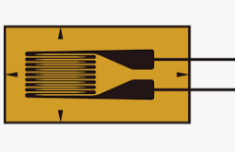
- resistance strain gauge (sensitive element)
2. elastic body (sensing element)

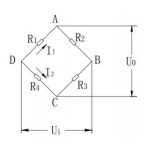
3. Wheatstone bridge (measurement circuit)
The elastic body produces elastic deformation under the action of external force, so that the resistance strain gauge pasted on its surface is also deformed.
After the resistance strain gauge is deformed, its resistance value will change (increase or decrease), and then the corresponding measurement circuit converts this resistance change into an electrical signal (mV), thus completing the process of converting the external force into an electrical signal.
Since the original signal of the load cell is a very small voltage signal: mV, in order to interpret it as a weight signal that we can see, there are several ways:
1. The load cell is directly connected to the weighing indicator. After calibration, the conversion circuit in the weighing indicator can convert the analog signal into a digital signal and display it on the indicator screen.
2. The load cell is connected to the analog weight transmitter(Amplifier), which can amplify the mV signal into 0~5V/0~10V/4~20mA and other signals that can be recognized by PLC and so on.
3. The load cell is connected to the digital weight transmitter: the mV signal can be converted into a digital signal and other signals that can be recognized by a computer through RS485/RS232.