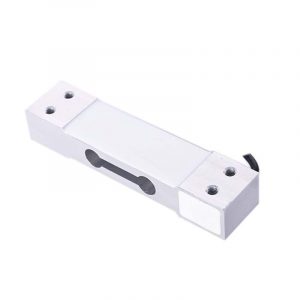
1. The choice of stability:
After a high-precision intelligent weighing system sensor is used for a period of time, its ability to maintain the same performance is called stability. In addition to its own structure, the factors affecting the long-term stability of the sensor are mainly the use environment. Therefore, to make the sensor have good stability, it must have strong environmental adaptability. Before selecting a sensor, investigate its use environment, select a suitable sensor according to the specific use environment, or take appropriate measures to reduce the impact of the environment.
The environment will have the following effects on the high-precision intelligent load cell:
1.1. The high-temperature environment causes the coating material of the sensor to melt, the solder joints to open, and the internal stress of the elastomer to undergo structural changes.
1.2. Dust and humidity in the open air will cause a short circuit to the sensor.
1.3. In a highly corrosive environment, such as humidity and acidity, the elastic body of the sensor will be damaged or short-circuited.
1.4. The influence of the electromagnetic field on the chaotic signal output by the sensor.
1.5. Specially customized explosion-proof sensors must be selected for flammable and explosive environments.
There are quantitative indicators for the stability of the high-precision intelligent weighing system. After the service period is exceeded, it should be re-calibrated before use to determine whether the performance of the sensor has changed. In some occasions where the sensor is required to be used for a long time but cannot be easily replaced or calibrated, the selected sensor has stricter stability requirements and must be able to withstand a long-term test.
2. Selection of sensitivity:
Generally, within the linear range of the sensor, the higher the sensitivity, the better. Because only when the sensitivity is high, the output signal value corresponding to the measured value is relatively large, which is beneficial to signal processing. But when the sensitivity is high, the external noise irrelevant to the measured will also be amplified by the amplification system, affecting the measurement accuracy. Therefore, it is required that the sensor itself should have high sensitivity and minimize the interference signals introduced from the outside world.
3. Selection of the number and range of sensors:
The selection of the number of sensors in the high-precision intelligent weighing system is based on the use of the electronic weighing instrument and the number of points that the scale body needs to support.
4. Selection of precision:
High-precision intelligent weighing system Accuracy is an important performance index of the sensor, and it is an important link related to the measurement accuracy of the entire measurement system. The higher the accuracy of the sensor, the more expensive it is. Therefore, the accuracy of the sensor only needs to meet the accuracy requirements of the entire measurement system, and it is not necessary to choose too high. This makes it possible to select a cheaper and simpler sensor among many sensors that meet the same measurement purpose. If the purpose of measurement is qualitative analysis, it is enough to choose a sensor with high repeatability, and it is not suitable to choose a sensor with high precision; if it is for quantitative analysis, it is necessary to obtain an accurate measurement value, then choose a load cell with a precision level that can meet the requirements.
Accuracy selection meets the following two conditions:
4.1. Meet the requirements of instrument input. The output signal of the sensor must be greater than or equal to the input signal required by the meter.
4.2. Meet the requirements of the accuracy of the entire electronic scale. An electronic scale is mainly composed of three parts: scale body, sensor and instrument. When selecting the accuracy of the sensor, the accuracy of the sensor should be slightly higher than the theoretical calculation value.