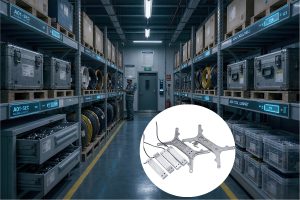
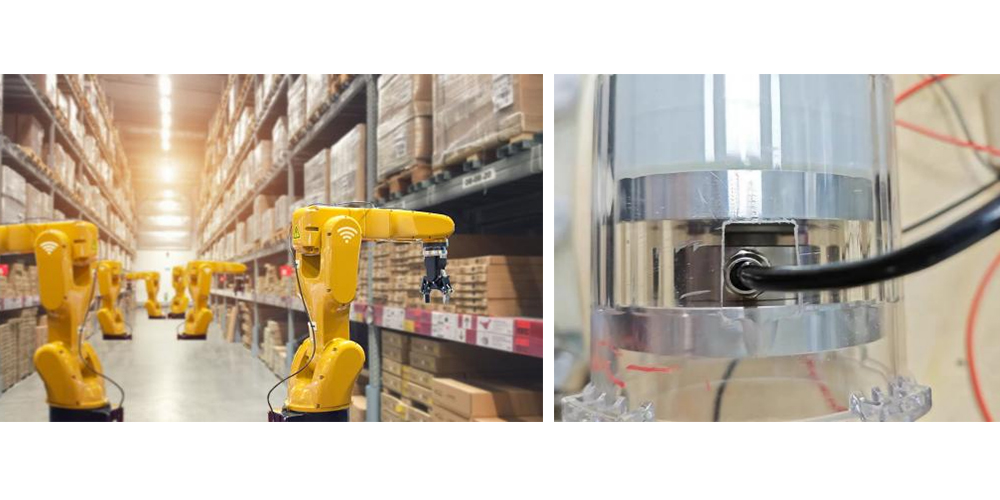
With the continuous advancement of technology, robots are increasingly applied across various fields. Their high efficiency boosts production rates, but traditional industrial robots alone cannot fully perceive their surroundings. In the era of Industry 4.0, robots have become smarter and more sensitive by integrating various sensors, enabling them to perform tasks and interact with their environment with greater precision.
This article briefly introduces several applications of force sensors in robots:
Manufacturing Process Automation with Robots
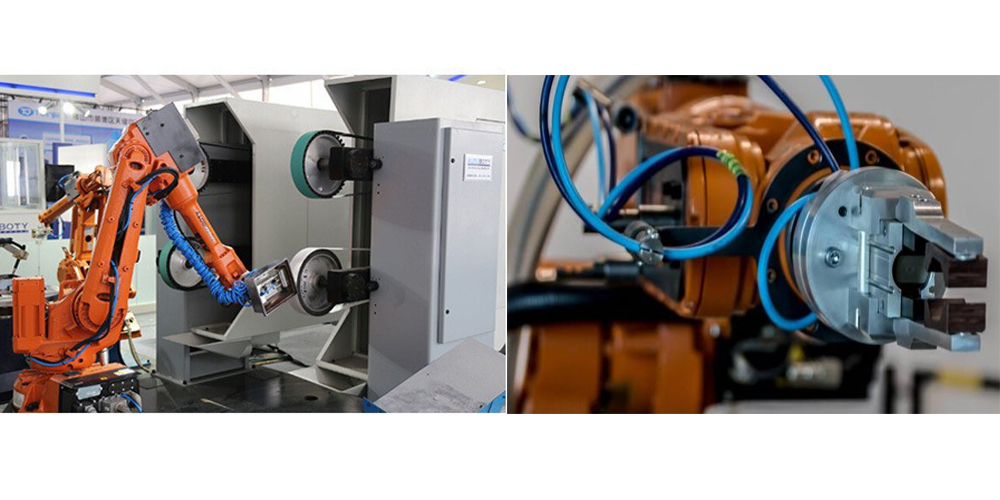
In industrial applications such as grinding and polishing, industrial robots require precise control of force. By incorporating force sensors into robots, a complete “force-sensing-feedback” loop can be established. The data provided by the force sensors allows for accurate force measurements and feedback within the robot’s programming, enabling automation and consistency in manufacturing processes. For instance, a six-dimensional force sensor can measure forces and torques along all six axes, detecting three force components and three torque components simultaneously. When dealing with complex tasks like assembly, polishing, grinding, or deburring, the robot’s six degrees of freedom greatly enhance its intelligence and operational capability.
Robot Assembly and Calibration
Previously, automating assembly tasks with robots was challenging due to the need for manual force detection. Introducing force sensors allows robots to sense external forces applied during assembly. For example, when installing a battery in a phone, very precise force is required to avoid damaging the components. By installing a force sensor on the robot’s end-effector, a low force threshold can be set in the robot’s program. The force sensor monitors the applied force in real-time and provides feedback to adjust the actuator’s movement, preventing component misalignment and damage. This ensures precise force control during assembly.

Logistics Robots Weight Sensing
When robots handle material handling or loading tasks, accurate weight sensing is crucial for safe and effective operation. Force sensors can measure weight changes on the robot’s arm or other devices, helping the robot adjust its posture or movements to balance and transport objects. Additionally, integrated force sensors are essential for safe human-robot collaboration. They can detect unexpected collisions or forces exceeding safety limits, allowing the robot to respond to environmental changes, trigger emergency stops, or slow down to prevent excessive force and protect human operators.

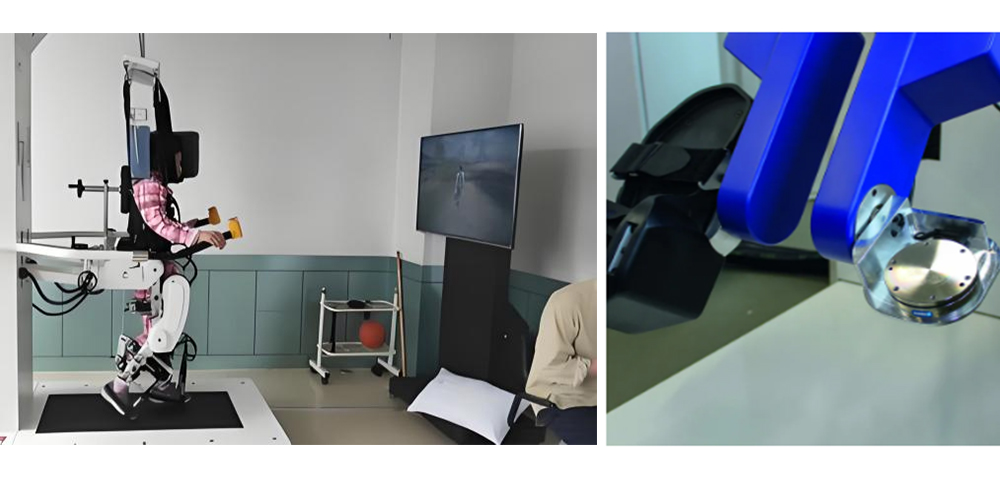
Robotic Rehabilitation Therapy
Rehabilitation therapy is a significant application of robotics technology. Robots not only assist patients with training but also help them regain muscle strength and motor functions. Force sensors play a critical role in this process by accurately sensing the patient’s strength and movement parameters, providing feedback for more personalized and effective rehabilitation plans. For example, when treating patients with hemiplegia, robots equipped with force sensors can accurately assess the patient’s strength and movement state, allowing for the development of tailored rehabilitation programs.
Amowellsensor offers various types of robot miniature force sensors, which are small, versatile, and capable of measuring tension, pressure, compression, torque, etc. They are easy to install, space-efficient, and customizable according to client needs for range, precision, and size. contact us if you need any help.
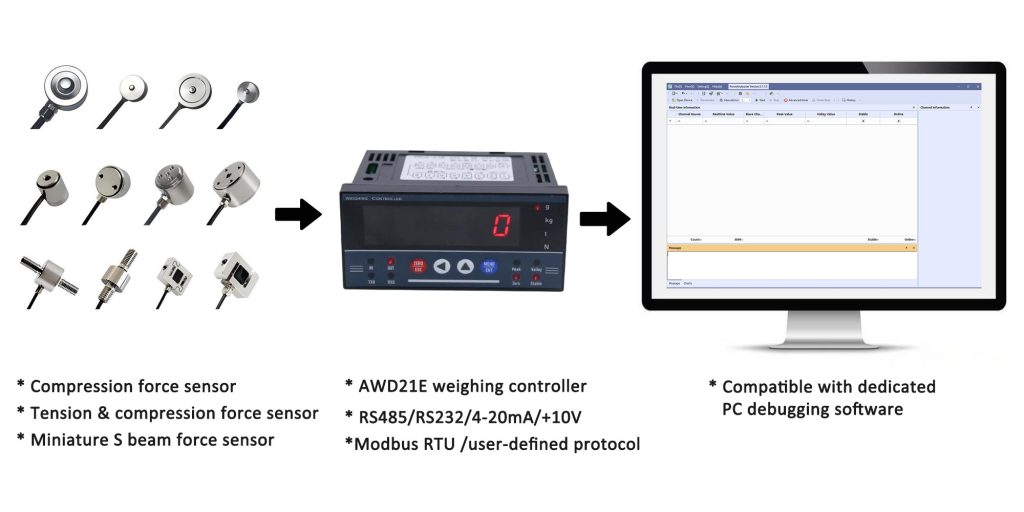

Amowell miniature force sensor series