
Healthy bees are the joy of every beekeeper, but how do you know if all is well inside the hive? Should we intervene and risk being unnecessarily invasive? Are honey harvests affected? These questions will be up to us Reply. Our load cells give the hourly change in hive weight, which is the perfect source of information for easy decipherings, such as the number of honeybees leaving the hive or an accurate estimate of winter honey reserves.
This starts with creating a scale that is highly accurate, capable of providing data in a very isolated location, self-sufficient and reliable in energy. The final product had to be very strong, very easy to work with, weatherproof and budget-friendly.
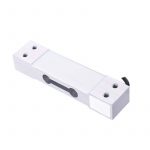
For an accurate assessment of the weight of the hive, our load cells quickly became the choice due to their properties that were well-suited for the project. It can measure weights up to 300kg with 2/10,000 accuracy, has minimal power consumption and is known to be completely reliable.
Result:
Once digitized, signals of changes in hive weight must be transmitted, and hourly weight and temperature information does not represent a large amount of data. The weighing results confirm day by day the evolution of the colony and the normal course of these events.
Aspects of high-precision scales:
Create a highly accurate scale capable of providing data in sometimes very isolated locations, energy self-sufficient and absolutely reliable. In addition, the final product had to be very strong, very easy to use, weatherproof and budget-friendly. Connected scales are aimed at professionals who typically work with more than 150 hives, the most common of which are genetically modified: hives are transported to different areas to produce specific honey according to the flowering season and type of flower.
For an accurate assessment of the weight of the hive, load cells quickly became the obvious choice due to their properties which are well-suited for the project. It can measure up to 300kg, it has minimal power consumption and it is known to be completely reliable. Load cells operating outdoors can easily withstand the harsh winters and hot summers a hive can experience. With an accuracy of 20 grams, the entry or exit of about 200 bees can be estimated. A hive contains over 50,000 bees.
The sensor is fixed in the center of a metal structure called a double-H structure, forming two support arms. The lower part rests on the ground and attaches to one side of the sensor, the upper part supports the hive and presses against the other end of the sensor. This structure produces a deformation proportional to the weight of the honeycomb. A temperature sensor in the dry housing completes the weight information. However, this is not the temperature inside the hive, but the temperature outside the environment.
Data transmission measurement:
Once digitized, the signal of the changing weight of the hive must be transmitted to the user. Beekeepers place their hives in locations they choose based on flower quality, but are usually isolated from any communication networks. In order to solve the transmission problem, the siafox network was selected, which uses SM frequency, which is especially suitable for long-distance low-speed switching in rural areas. This is because hourly weight and temperature information does not represent a large amount of data. The range is about 40 km and the simple antenna is about 30 cm. The network of 2,000 antennas covers more than 95% of the territory and spreads across 70 countries. Once transmitted, the data is transmitted to the Internet network and made available to users on the platform.
Weighing result:
Users simply use their hive’s serial number to access the data. Beekeepers usually have a great deal of knowledge about what’s going on in the hive at different times of the day and in different seasons. The weighing results confirm day by day the evolution of the colony and the normal course of these events.
The result: less movement and optimal honey harvesting.