
A baby’s weight is a crucial indicator of their growth and development. Pediatricians and parents rely on baby scales to monitor a baby’s weight accurately. Baby scales must be precise and reliable to ensure accurate measurements. To achieve this, load cells are a crucial component of baby scales. Load cells convert weight into mV signal,through AD conversion, which is then displayed on the scale’s screen. In this article, we will discuss load cells’ importance in baby scales,some load cell type can be used in baby scale and how they work.
Load cells use strain gauges, which are very small that can measure the strain on the material when force is applied. When a baby is placed on the scale’s platform, the load cells measure the weight and convert it into an electrical signal. The electrical signal is then sent to an amplifier, which amplifies the signal and sends it to the scale’s display. The display then shows the weight in the desired unit of measurement.
Load cells are essential in baby scales because they provide accurate measurements that are crucial for monitoring a baby’s growth and development. Inaccurate readings can lead to incorrect feeding, medication dosage, and this can be harmful to babies. Baby scales must have load cells that are precise, reliable, and durable to ensure that they provide accurate readings consistently. Load cells also help pediatricians and parents monitor a baby’s weight gain or loss, which can be an indicator of their health status.
There are different types of load cells used in baby scales. The most common type is the strain gauge load cell, which uses strain gauges to measure the weight.
Each type of load cell has its advantages and disadvantages, and the choice of load cell depends on the specific application and requirements of the baby scale.
Below is some Amowell load cell types that already successfully used in baby scale:
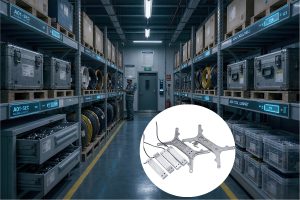
AM21B half bridge load cell, this is a type of economical load cell, some size of only 34*34mm width and length,and thickness only 2.5mm for 50kg capacity. four holes for installation and one center hole as force point to sense the weight. some other similar load cell type :AM21D,AM23A,AM23B,AM24A.

AF91A is a type of planar beam load cell, that is full bridge can be used in baby scale. compare to half bridge micro load cell,it is also low profile but with bigger size and higher accuracy and long-term stability.
Some preliminary data and anecdotal evidence suggests that several countries experienced an increase in birth rates during the COVID-19 pandemic. Such as Indonesia(according to https://theaseanpost.com/article/indonesia-baby-boom-or-bust) ,thus the baby related product will greatly increase,and the baby scale and medical scale for newborn as a basic and important product will also be used more widely.At mean time, more and more baby scale manufacturers will need to choose suitable load cell to make it suitable for different level baby scales.