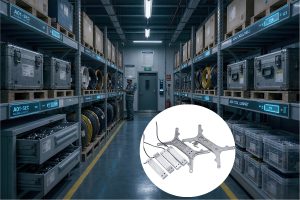
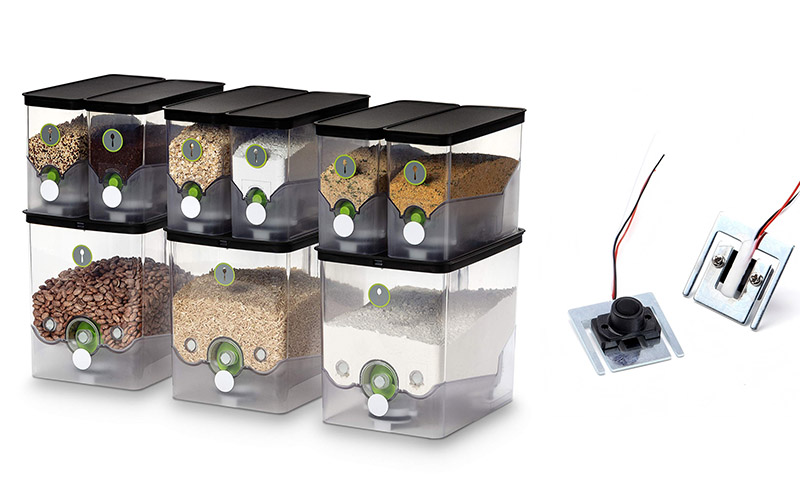
In smart kitchen storage solutions, accurate and repeatable weight measurement helps enable inventory tracking, portion control, and user-friendly “refill” reminders. A compact weighing load cell (often called a weight sensor) is a practical way to add precision weighing to storage containers, pantry drawers, and ingredient dispensers without changing the user experience.
This article explains how load cells are used in kitchen storage systems and recommends two proven options for common capacity ranges: AM23A (3kg) and AM24B (5kg).
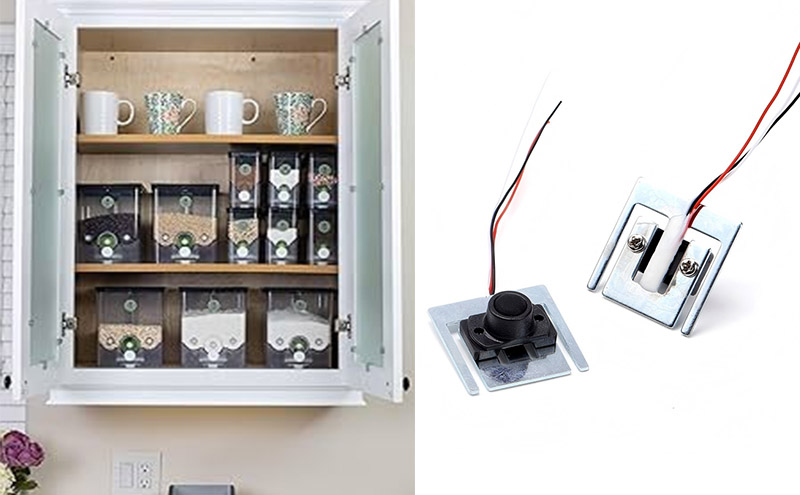
Why use a load cell in kitchen storage?
Kitchen storage products typically need:
- Stable readings under long-term static load (ingredients stored for days or weeks)
- Good resolution to detect small changes, such as adding or removing a handful of ingredients
- High repeatability to support reliable alerts and consistent UI behavior
- Compact integration with limited space and strict mechanical constraints
- Robustness against vibration, temperature drift, and everyday impacts
A strain-gauge load cell sensor with a suitable amplifier and calibration strategy can meet these requirements while keeping BOM and assembly complexity under control.
Typical applications in kitchen storage products
- Smart pantry containers and bins
- Detect remaining quantity and usage trends
- Trigger low-stock notifications
- Support “one-tap reorder” experiences
- Drawer-based ingredient storage
- Measure total content per drawer compartment
- Prevent overfilling and manage max-load protection
- Provide consistent readings under sliding and daily handling
- Ingredient dispensers and hoppers
- Enable accurate portioning by weight
- Detect bridging or clogging via abnormal weight change patterns
- Improve repeatability versus time-based dispensing
- Kitchen organization systems for meal prep
- Track consumables (rice, flour, coffee beans, pet food)
- Support multiple SKUs with different density using calibration profiles
Key selection criteria for a kitchen storage load cell sensor
When choosing a weighing load cell for kitchen storage, consider:
- Capacity and safety margin: Choose nominal capacity above the expected maximum load, including container weight and dynamic shocks.
- Mechanical interface: Ensure mounting method supports force transfer without side-load or torque that can cause nonlinearity.
- Repeatability and creep performance: Important for long-term static measurement.
- Environmental stability: Temperature variation in kitchens is common.
- Integration constraints: Height, wiring path, and protection from spills.
Recommended products
AM23A – 3kg load cell (recommended for compact containers)
AM23A-3kg micro load cell is suitable for small to mid-size kitchen storage modules where space is limited and the typical ingredient mass stays within a few kilograms.
Best-fit scenarios
- Smart countertop containers
- Small pantry bins
- Coffee bean or tea storage
Why choose AM23A-3kg load cell sensor ?
- Half bridge structure, 4 pieces in a set
- Size: 26*26*1mm, with feet, 0.05% accuracy
- Capacity aligned to compact storage use cases
- Helps maintain better sensitivity in low-load ranges
- Easier to integrate into smaller mechanical frames
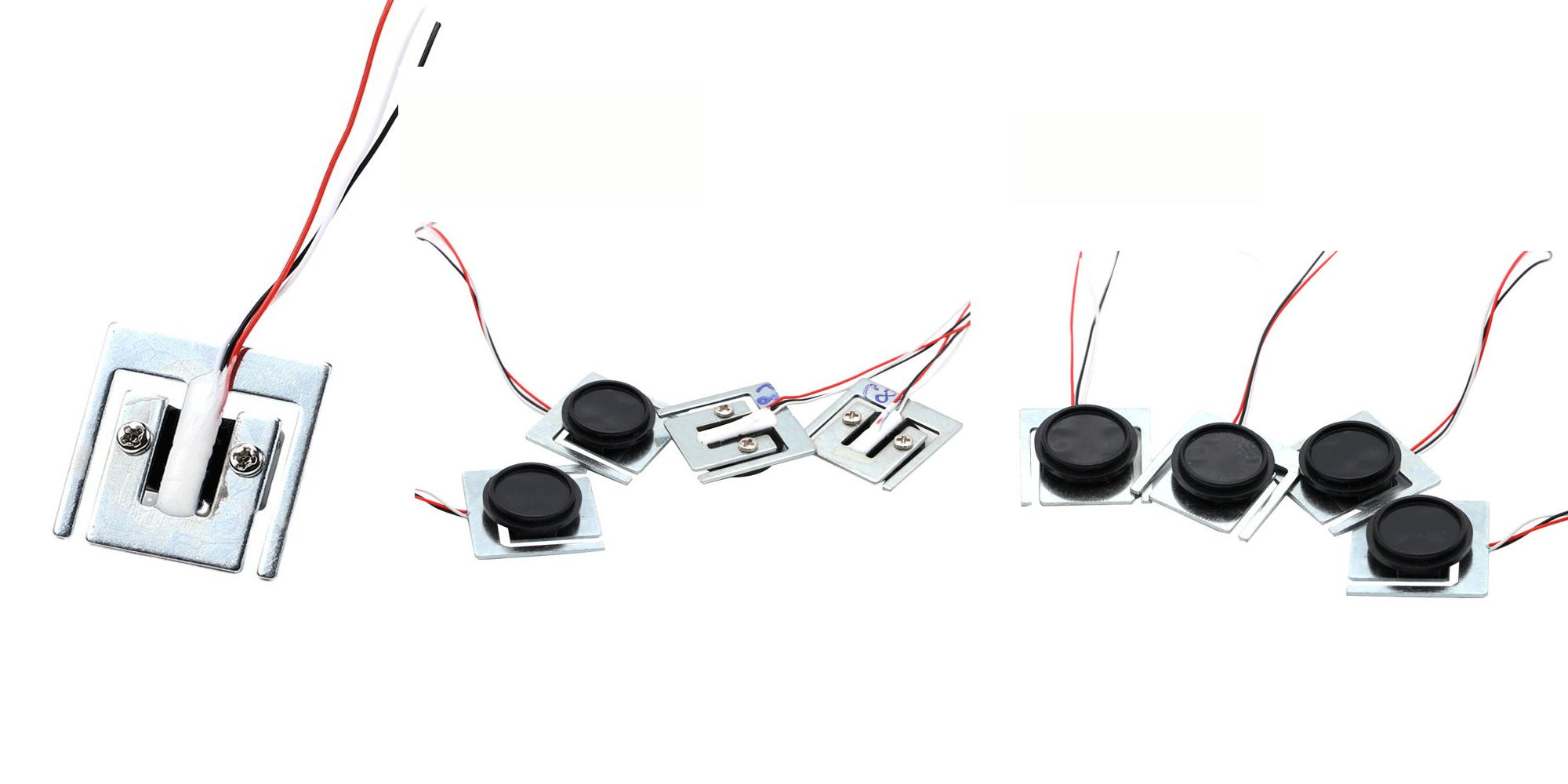
AM24B– 5kg load cell (recommended for larger bins and drawers)
AM24B-5kg micro load cell is a solid choice for kitchen storage systems that require additional headroom for heavier ingredients, larger containers, or user handling impacts.
Best-fit scenarios
- Drawer-based bulk storage
- Larger pantry bins
- Multi-compartment storage modules
Why choose AM24B-5kg load cell?
- Half bridge structure, 4 pieces in a set
- Size : 26*26*1.0 mm, with feet
- Higher capacity margin for real-world usage
- Better tolerance for heavier containers and dynamic loads
- Suitable for broader kitchen storage product lines

Integration notes (practical tips)
- Mechanical design: Use a rigid load path and minimize side forces. Add mechanical stops to protect against overload.
- Calibration: Perform multi-point calibration. Store coefficients per SKU or per container type.
- Filtering: Apply digital filtering to reduce noise from vibration and handling, but keep response time acceptable for user interaction.
- Power and EMC: Use stable excitation and good grounding practices to reduce drift and interference.
- Sealing and protection: Design for spills, moisture, and cleaning.
Summary
For Kitchen Storage applications, a well-selected load cell improves accuracy, user experience, and product intelligence. If your design targets compact storage, AM23A-3kg is a strong fit. If you need more capacity margin for larger bins or drawers, AM24B-5kg is recommended.
If you share your container size, maximum load, and mechanical mounting approach, we can suggest an optimal capacity margin and integration layout.
info@amowellsensor.com
#LoadCell #WeightSensor #KitchenStorage #SmartKitchen #SmartStorage #InventoryManagement
#IoTDevices #SensorTechnology #StrainGauge #EmbeddedSystems #KitchenInnovation #Amowellsensor